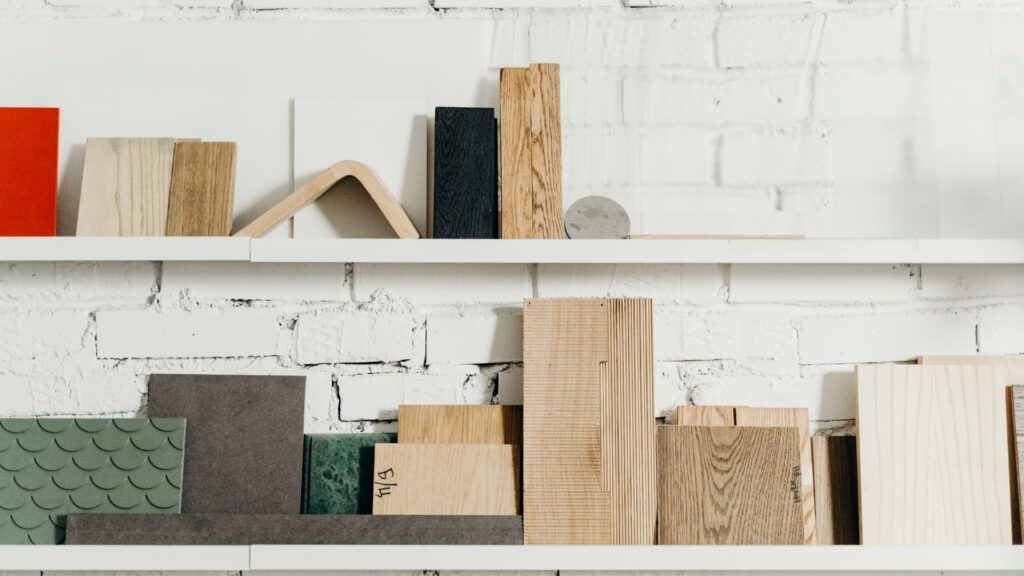
When comparing melamine faced MDF vs chipboard vs solid wood, choosing the right board for kitchen cabinets, built-in wardrobes, or shopfitting in South Africa usually comes down to these three options. Each has its place, and the "best" choice depends far more on the specific application than on which material is generally considered "better."
This guide breaks down what each material actually is, where it performs well, where it falls short, and how to think about the trade-offs for your particular project — whether that's a kitchen, a bedroom cupboard, or an office fit-out.
Melamine Faced MDF vs Chipboard vs Solid Wood: The Quick Comparison
| MFC (Chipboard) | MFMDF | Solid Wood | |
|---|---|---|---|
| Relative cost | Lowest | Mid-range | Highest |
| Edge detailing | Limited | Excellent | Excellent (with skill) |
| Screw/fitting hold | Good | Better | Best |
| Moisture sensitivity | Core vulnerable if edges damaged | Core vulnerable if edges damaged | Naturally more tolerant, but moves with humidity |
| Best use | Hidden carcasses, shelving | Doors, drawer fronts, panels | Feature pieces, statement items |
What Is Melamine Faced Chipboard (MFC)?
Melamine faced chipboard — sometimes referred to by its technical name, particleboard, or shortened to MFC — is made from wood particles and chips bonded together with resin under heat and pressure, then faced on both sides with a melamine-impregnated decorative paper.
Strengths:
- The most affordable of the three options, making it the most common choice for kitchens, built-in cupboards, and office furniture across South Africa
- Available in a huge range of colours, woodgrain finishes, and textures
- Dimensionally stable under normal conditions — doesn't expand or contract with humidity the way solid wood can
- The melamine surface is durable, easy to clean, and resistant to everyday scuffs and stains
Weaknesses:
- The particle structure means screws and fittings don't hold quite as securely as in MDF, particularly with repeated removal and reinsertion
- Cut edges are more prone to chipping during manufacturing if not handled carefully
- Like all melamine-faced boards, the core is vulnerable to moisture if edge banding is damaged or poorly sealed
Best for: Kitchen cabinet carcasses, wardrobe interiors, shelving, and any application where the board is largely hidden or where cost-effectiveness matters most — which, for most homeowners, is the majority of a project. South African suppliers such as PG Bison offer extensive MFC ranges in a wide variety of finishes.
Need a trusted carpenter in Bloemfontein? We match you with a verified local carpenter — free of charge, no obligation.
Request One FreeWhat Is Melamine Faced MDF (MFMDF)?
Medium-density fibreboard (MDF) is made from wood fibres — rather than particles — combined with resin and pressed into dense, uniform sheets. When faced with melamine, you get MFMDF: a board with the same easy-clean, decorative melamine surface as MFC, but a noticeably different core.
Strengths:
- The fine, uniform fibre structure means edges can be machined, routed, or profiled cleanly — making it the preferred choice for doors, panels with detailing, or anything requiring a shaped edge
- Holds screws and fittings more securely than chipboard, particularly useful for hinges and hardware that gets used daily
- Denser and heavier, which translates to a more solid feel for cabinet doors and visible panels
- Smoother surface beneath the melamine layer, which can result in a slightly more refined final appearance on detailed work
Weaknesses:
- More expensive than MFC, sometimes significantly so depending on the supplier and range
- Heavier, which can be a consideration for large doors or panels and the hardware that supports them
- Like MFC, still vulnerable at exposed or damaged edges where moisture can reach the core
Best for: Cabinet doors, drawer fronts, and any visible panel where edge detailing, routing, or a more premium feel matters — while the hidden carcass behind it is often still MFC to manage cost.
What About Solid Wood?
Solid wood remains the benchmark for quality, character, and longevity — but it comes with a different set of considerations entirely, and it's worth being realistic about where it fits in a typical South African home or office project.
Strengths:
- Unmatched natural appearance — grain, texture, and character that no decorative paper can fully replicate
- Can be sanded, refinished, and repaired repeatedly over decades, extending its useful life well beyond melamine-faced boards
- Genuinely solid throughout — no core material to protect, no edge banding to fail
- Adds long-term value to a home, particularly for feature pieces
Weaknesses:
- Significantly more expensive than either melamine option — often by a wide margin
- Reacts to humidity and temperature changes by expanding and contracting, which needs to be accounted for in the design and joinery
- Requires more maintenance over its lifetime — oiling, sealing, or varnishing depending on the finish
- Colour and grain can vary considerably between pieces, even from the same species
Best for: Feature items — a statement table, a display unit, a front door, or accent pieces where the natural material is the point. For full kitchens or wardrobes, solid wood is usually reserved for higher-budget projects or specific design choices rather than the default.
How These Materials Are Often Combined
In practice, most well-built projects in South Africa don't use just one material throughout — they combine them strategically:
- Kitchen example: MFC carcasses (hidden, cost-effective) with MFMDF doors and drawer fronts (visible, need clean edges) and perhaps a solid wood feature shelf or island top
- Wardrobe example: MFC throughout for the main structure, with MFMDF used only where doors have detailing or a profiled edge
- Office example: MFC for desks and storage units, with a solid wood or veneered feature panel at reception
This is one of the things worth checking on a quote — not because mixing materials is wrong (it's standard practice and usually the smartest approach), but because it helps you understand why certain parts of a quote cost what they do.
Making the Right Choice for Your Project
A few practical questions can help guide the decision:
- Will the surface be visible and handled often? Doors, drawer fronts, and handles benefit from MFMDF's durability and clean edges
- Is it hidden structure? MFC is almost always the right call for carcasses, internal shelving, and anything behind a door
- Is this a statement piece? Solid wood makes sense where the material itself is part of the design
- What's the budget? MFC keeps costs down without sacrificing day-to-day durability for most applications — and a good carpenter will know how to allocate budget across materials for the best overall result
Final Thoughts
There's no single "best" material when weighing up melamine faced MDF vs chipboard vs solid wood — each does a specific job well, and the smartest projects use a combination based on where each material's strengths actually matter. What matters most is that your quote reflects sensible choices for each part of the project, and that you understand why certain materials were chosen where they were.
If you're unsure whether the materials specified in your quote make sense for your project — or whether you're paying a solid wood price for what's effectively a chipboard job — CarpenterPro's Price Protection service can review the breakdown for you, so you know exactly what you're getting for your money. You can also request a trusted local carpenter in Bloemfontein, free of charge.